Column · @rafaelccpv857
How a Pizza Restaurant Creates the Perfect Crust

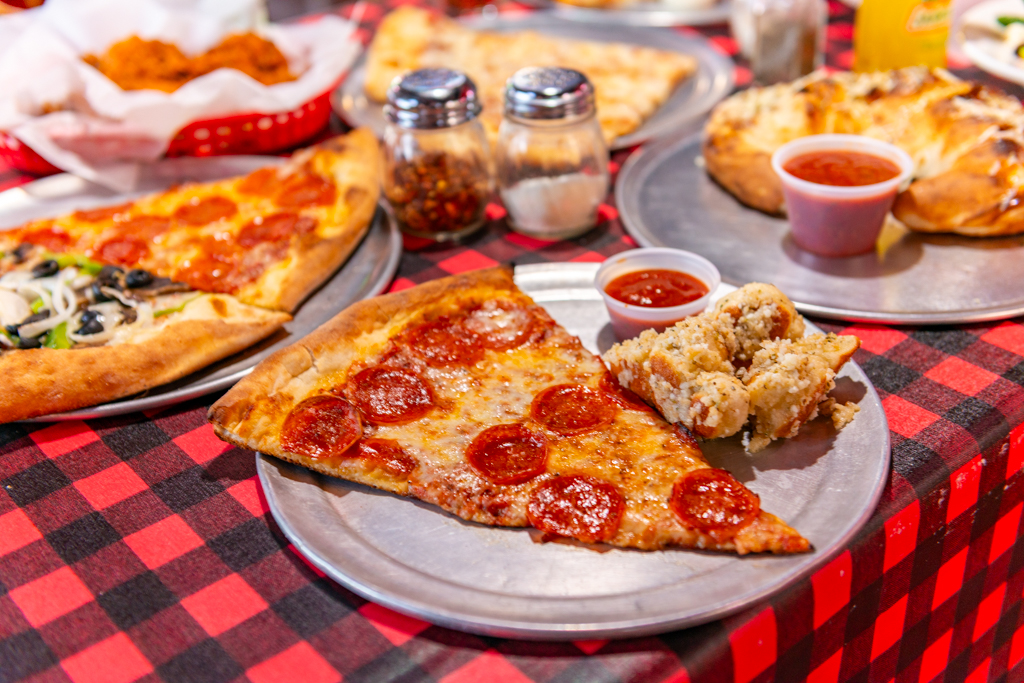
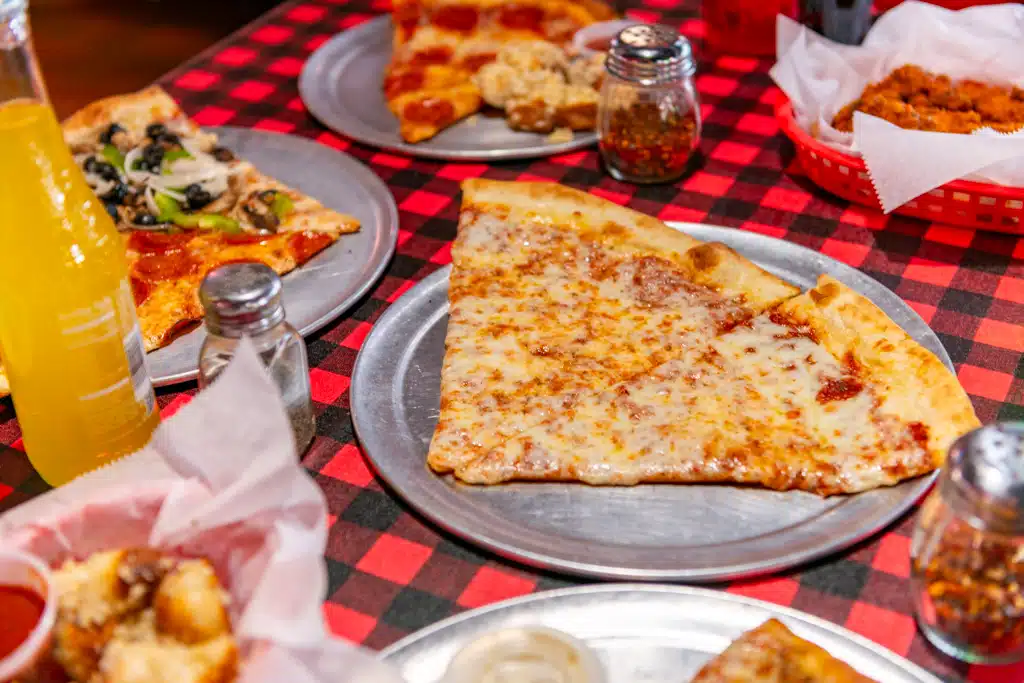
Walk into a busy pizza restaurant at the right moment, and you can tell almost everything about its standards by watching the dough station. The motion is quick but not frantic. Dough balls come out of cool storage with a certain elasticity. Flour is used sparingly. The baker presses, stretches, and turns with practiced hands, then slides the pie into an oven that is already doing half the work. A few minutes later, the crust comes out blistered, browned, and balanced, crisp where it should be crisp, airy where it should be airy, and sturdy enough to carry toppings without turning limp in the center.
People often talk about crust as if it were a single decision. Thin or thick. Crispy or chewy. New York, Neapolitan, tavern, pan. In a working restaurant, crust is not one decision. It is a chain of small choices, each one affecting the next. Flour selection influences hydration. Hydration changes handling. Fermentation affects flavor, browning, and digestibility. Oven type shapes timing. Even the amount of sauce matters, because wet toppings can undo hours of good dough work in under a minute.
A great pizza restaurant understands that crust is both craft and system. You need feel, judgment, and repetition, but you also need consistency strong enough to survive a Friday dinner rush. The perfect crust is not created by a secret ingredient. It is built through control.
The crust starts long before the oven
Most customers experience crust in the last five minutes of its life, when it bakes. The restaurant experiences it from the first minute of mixing. That difference matters.
Dough begins with humble ingredients: flour, water, salt, yeast, and sometimes oil. Yet each of those ingredients carries enormous weight. A baker cannot hide weak dough behind cheese. If the flour is wrong for the style, the finished pie will feel off no matter how skilled the rest of the kitchen may be. If the water percentage is too low, the crust can bake up dense and tough. If it is too high, the dough may spread poorly, stick during handling, or collapse under toppings.
In a professional setting, the first job is deciding what the crust is supposed to be. A pizza restaurant aiming for a classic Neapolitan profile wants tenderness, open structure, and charring from intense heat. A neighborhood slice shop may want a crust that folds without cracking and holds up in a display case. A Detroit-style operation needs dough that fries lightly in the pan while staying soft inside. “Perfect” changes with the house style, but the standards within that style must be exact.
That is why experienced operators write dough formulas in percentages, not just cups and intuition. Bakers think in terms of hydration, salt percentage, yeast activity, target dough temperature, and fermentation time. They know that if the kitchen runs hot in August, the mix may need cooler water or shorter bench time. If winter dries out the air, proofing may behave differently. Good crust comes from decisions made with eyes open.
Flour is the skeleton
Ask ten pizza makers about flour and you will get twelve opinions, many of them heated. That is not posturing. Flour does most of the structural work in a crust.
Higher-protein flours generally build stronger gluten networks, which support stretch, oven spring, and chew. Lower-protein flours can produce a more tender bite, but they may not tolerate long fermentation or heavy handling as well. Some restaurants blend flours to get the best of both. A very fine “00” style flour behaves differently in a hot oven than a bread flour does in a deck oven. The protein number on the bag matters, but so does milling, ash content, absorption, and brand consistency.
A serious pizza restaurant usually settles on flour only after a period of testing. The owner or chef may bake dozens of versions with small changes, comparing not just flavor but workability. A flour that tastes excellent but becomes sticky and unstable during a dinner rush can be a liability. Restaurants do not have the luxury of treating every pie like a private experiment. The dough must perform at scale.
There is also a practical cost element. Premium flour can improve texture and flavor, but margins matter. The best operators know where the flour truly changes the guest experience and where romance outruns reality. In blind tastings, diners often notice fermentation quality and bake quality before they notice obscure flour provenance. The strongest restaurants spend carefully and where it counts.
Hydration decides texture, but only if the kitchen can handle it
Hydration is one of the most misunderstood parts of pizza dough. Customers hear that a higher hydration dough is better, and sometimes cooks repeat that claim as if it were a rule. It is not. High hydration can help create an open crumb, light interior, and dramatic oven spring. It can also create chaos if the dough is not managed correctly.
A 60 percent hydration dough and a 70 percent hydration dough do not merely differ by ten points on paper. They can feel like entirely different products. The wetter dough may ferment faster, stick more aggressively, and demand gentler handling. It may shine in a wood-fired oven yet become frustrating in a cooler setup. It may reward skill, but it narrows your margin for error.
In a restaurant, hydration must match the entire operation. If the staff is highly trained, the dough room is well controlled, and the oven is hot enough to set the crust quickly, a wetter dough can deliver wonderful results. If the line is staffed by newer cooks during lunch service and the kitchen is humid, slightly lower hydration may produce a more reliable pie.
This is where experience shows. Good pizza makers do not chase abstract ideals. They choose the hydration that gives the best crust in their specific environment, on their equipment, with their team.
Fermentation is where flavor appears
If flour gives dough its skeleton, fermentation gives it a pulse. Freshly mixed dough can bake into something edible, but it rarely becomes memorable. Time changes dough in ways no shortcut can fully replace. Enzymes break down starches into sugars. Yeast produces gas and subtle flavor compounds. Gluten relaxes. The dough becomes more extensible and more expressive.
Many strong pizza restaurants rely on cold fermentation, often in the range of 24 to 72 hours, depending on style and process. That extra time usually improves depth of flavor and handling. The crust develops a https://beckettpjuh944.westhavenscope.com/posts/how-a-pizza-restaurant-can-make-corporate-catering-easy faint nuttiness, sometimes a gentle tang, and often better browning because more sugars are available at bake time. The dough also tends to stretch with less resistance, which matters when you are shaping pie after pie at speed.
But long fermentation is not a magic wand. Push it too far and dough can become overproofed, fragile, and sour in the wrong way. The yeast level has to match the timeline. The storage temperature must stay stable. Dough balls need enough space and protection to avoid drying out. One restaurant may get beautiful results at 48 hours, while another sees peak performance at 36 because its walk-in runs a little warmer.
A veteran baker can often tell where a dough is in its life by touch alone. Under-fermented dough feels tight and stubborn. Properly fermented dough has resistance, but it yields. Over-fermented dough may feel puffy, delicate, and a little too eager to collapse. This kind of judgment cannot be outsourced to a recipe card. It comes from repetition and attention.
One of the quiet marks of a well-run pizza restaurant is that the dough schedule is treated with respect. If service is busier than expected, managers do not simply “make more dough for tonight” and pretend it is the same product. They understand that dough has a biological timeline. You can adapt around that timeline, but you cannot bully it.
Salt, yeast, and oil do more than most diners realize
The supporting ingredients in dough tend to be overlooked because they are used in small amounts. Yet these details separate a crust that tastes flat from one that tastes complete.
Salt sharpens flavor and strengthens dough. Without enough of it, crust tastes dull even when baked well. Too much, and the dough can ferment more slowly or taste harsh. In professional kitchens, the salt percentage is measured carefully because small shifts matter across large batches.
Yeast is not only a rising agent. It is also part of flavor development. Too much yeast can force quick expansion but leave the dough tasting immature. Too little can lead to sluggish fermentation and inconsistent proofing. Many restaurants prefer to use very small amounts and let time do more of the work.
Oil depends on style. Some traditional doughs use none at all. Others include a modest percentage to improve tenderness, color, and extensibility. Pan pizzas often benefit from dough and pan oil working together to build texture. A thin-crust deck-oven pizza may need a different approach. There is no universal answer, only the right choice for the style being served.
Temperature control is the invisible discipline
If you want to know whether a pizza restaurant is serious about crust, ask how it controls dough temperature. Not every operation will advertise that detail, but the best ones think about it constantly.
Dough temperature after mixing affects fermentation speed from the start. If the dough finishes too warm, it may race ahead before it ever reaches cold storage. If it is too cool, fermentation can lag and the schedule becomes uneven. Professionals often aim for a target finished dough temperature and adjust water temperature to hit it. On a hot day, the water may need to be much colder. In cooler months, not as much.
Then there is the walk-in. A refrigerator that cycles too widely can create real inconsistencies. One stack of dough trays ferments differently from another. Staff members may not notice until service, when some dough balls open beautifully and others fight back or tear. The customer only sees the final pie, but the root cause often began with a few degrees of temperature drift hours earlier.
Bringing dough to room temperature before stretching is another point where weaker restaurants stumble. Cold dough tends to shrink and resist shaping. Over-warmed dough can turn slack. Timing this step correctly, especially during varying levels of business, requires discipline. The goal is to make each dough ball arrive at the bench ready, not merely available.
Shaping technique protects what fermentation built
It is surprisingly easy to destroy a well-made dough in the final moments before baking. Heavy-handed shaping can press out the gas that fermentation spent days creating. Too much bench flour can burn on the oven floor and leave bitter notes on the crust. Excessive rolling can flatten the structure into something more like a cracker than a living dough.
At a strong pizza restaurant, shaping looks simple because the staff has done it thousands of times. The dough is gently pressed from the center outward, leaving some air at the rim if the style calls for a cornicione. Gravity is allowed to help. Hands guide rather than force. The baker knows when to stop stretching because over-thinning the center leads to tears and sogginess once sauce lands.
There is a practical balance here between beauty and throughput. On social media, dramatic hand stretching makes for good video. During actual service, the goal is repeatable quality. The best kitchens shape with efficiency, but they do not rush to the point of damage. There is a rhythm to it. Reach, rotate, stretch, check. Then top and bake.
Sauce and toppings can ruin a crust just as easily as dough mistakes
One of the hardest lessons for new operators is that perfect dough does not guarantee perfect crust. The bake is a whole-system event. If sauce is too wet, if mozzarella releases too much moisture, or if toppings are piled without restraint, the center of the pizza can stay soft while the rim browns. Customers often blame the crust, but the root issue may be topping load.
Restaurants that care about crust think seriously about topping architecture. They ask how much moisture each ingredient contributes, how quickly it releases that moisture, and whether the oven can drive it off fast enough. Fresh mushrooms behave differently from pre-roasted ones. Thick-cut vegetables may need partial cooking. Fresh mozzarella gives a different result from low-moisture cheese. A spoonful of sauce too many can change the entire base.
This is why menu design matters. Not every appealing combination is structurally sound. A pizza restaurant with high standards edits itself. It may offer a sausage and mushroom pie, but the mushrooms are treated first. It may use ricotta in restrained dollops rather than a full blanket. It may finish with fresh basil after baking rather than before, protecting both the herb and the crust below it.
There is judgment in restraint. The best pizza is rarely the heaviest.
The oven finishes the argument
Dough preparation sets the stage, but the oven settles the matter. Different ovens create very different crusts, even with the same dough.
A wood-fired oven can deliver intense top and bottom heat, rapid oven spring, and the leopard spotting that many diners love. It also demands close attention, because a few seconds can separate beautifully charred from burnt. Gas deck ovens offer steadier control and can produce excellent browning with the right stone temperature and bake time. Conveyor ovens, often dismissed by romantics, can be tuned to produce surprisingly consistent crust when used intelligently, especially in high-volume environments.
What matters most is how well the dough formula matches the oven. A dough designed for a 90-second bake at very high heat may not perform in a seven-minute deck bake. Sugar levels, hydration, thickness, and topping choices all need recalibration when the oven changes. Restaurants that switch equipment without reworking the dough often end up blaming the wrong variable.
The oven floor temperature is especially important. If the bottom heat is too low, the crust can pale and dry out before it crisps. If too high, the base burns before the top finishes. During service, that temperature is constantly in motion as pizzas are launched and retrieved. Skilled bakers learn the hot zones, rotate as needed, and understand the recovery time between bakes. That is craftsmanship, but it is also operational awareness.
Consistency under pressure is the real test
A beautiful pizza made at 3:00 in the afternoon proves the concept. A beautiful pizza made at 7:30 on a Saturday proves the restaurant.
This is where systems matter. Dough must be portioned evenly so every pie bakes on the same schedule. Sauce must be measured with discipline. Cheese coverage has to be predictable. The peel station must stay dry and clean enough to prevent sticking. The oven tender has to know when a pie needs an extra turn and when it needs to come out now, not in ten seconds.
Many restaurants can produce a great crust when the chef is present and the room is calm. Fewer can do it with a full board of tickets, a new hire on toppings, and a delivery app ringing every few minutes. The pizza restaurant that creates the perfect crust night after night is usually the one that has removed as much randomness as possible without stripping away craft.
That means documenting dough formulas, training staff properly, monitoring fermentation, calibrating ovens, and tasting constantly. It also means knowing when to refuse compromise. If dough is not ready, if oven conditions are wrong, if weather has changed the behavior of the batch, someone in the kitchen has to notice and respond before the guest does.
Great crust is tactile, not theoretical
There is a point where technical knowledge meets touch. Recipes and percentages are necessary, but crust is ultimately physical. You hear it when a well-baked base crackles lightly after leaving the oven. You feel it when the slice bends at the tip but not in the middle. You taste it in the first bite, when the crust offers resistance, then gives way, carrying wheat flavor rather than just acting as a plate for toppings.
Experienced pizza makers trust these cues. They know that two doughs with identical formulas can behave differently if the flour lot changes, if the ambient humidity rises, or if yesterday’s service forced a timing adjustment. They adapt because they are paying attention to what is in front of them, not just what is written on the wall.
That adaptability is often what separates an excellent local shop from a merely competent one. The best places are not guessing. They are reading the dough, reading the oven, and making micro-corrections all service long. Most customers never notice those corrections. They simply notice that the pizza is reliably good.
Why the best crust feels effortless to the customer
The strange thing about a great crust is that it rarely announces the labor behind it. The diner does not see the flour tests, the failed batches, the early-morning mixing, or the argument over whether the dough peaked at 36 hours or 48. They just get a pie that feels right. The edge has color and lift. The underside has structure. The interior is open without being gummy. The flavor lingers a little after the cheese is gone.
That apparent ease is the product of hard-earned discipline. A pizza restaurant creates the perfect crust by treating dough as both ingredient and process. It respects time, temperature, and proportion. It shapes gently, tops intelligently, and bakes with precision. Most of all, it understands that crust is not an accessory. It is the foundation of the meal, the part every customer tastes in every bite, whether they realize it or not.
When a restaurant gets that foundation right, everything above it improves. The sauce tastes brighter. The cheese feels better integrated. Even simple toppings seem more vivid. That is the power of a serious crust. It does not just support the pizza. It defines it.
RUFFRANO'S HELL'S KITCHEN PIZZA Security
385 Main St, Colorado Springs, CO 80911
(719) 390-4355
FAQ About pizza restaurant
Is there a Hell's Kitchen pizza restaurant in Security-Widefield?
Yes. Ruffrano's Hell's Kitchen Pizza has a Security-Widefield location at 385 Main St.
Where can I find pizza delivery in Security-Widefield?
Ruffrano's Security location offers online ordering. Enter your address at checkout to check delivery availability and fees.
Where can I find gluten-free pizza in Security-Widefield?
Ruffrano's menu lists a 12-inch gluten-free option. Call the Security location to confirm availability and ask about shared equipment if cross-contact is a concern.